Table of Contents
- Understanding the Landmark Ruling
- Factual Background of the Case
- Key Legal Issues Addressed by the Supreme Court
- Judicial Approach to Pre-Trial Incarceration
- Critical Factors for Granting Bail
- Frequently Asked Questions
Understanding the Landmark Ruling
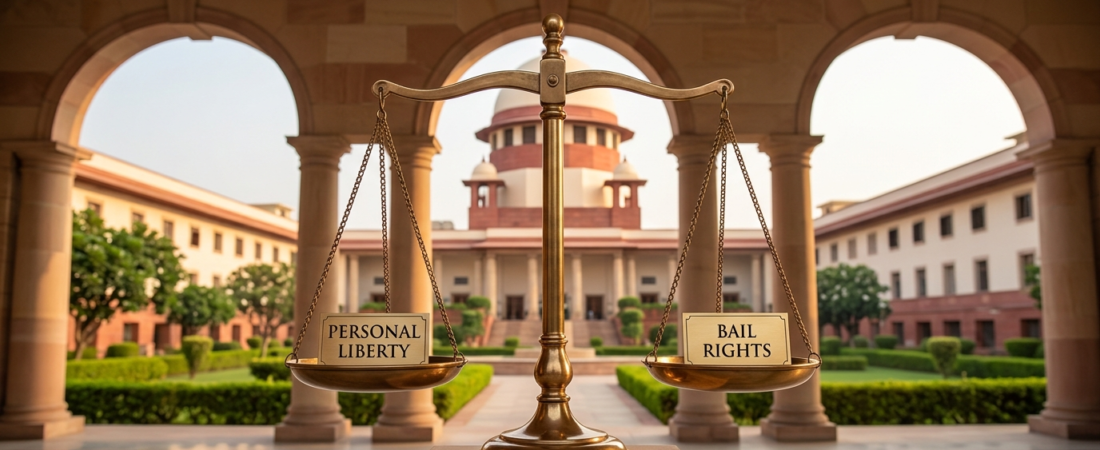
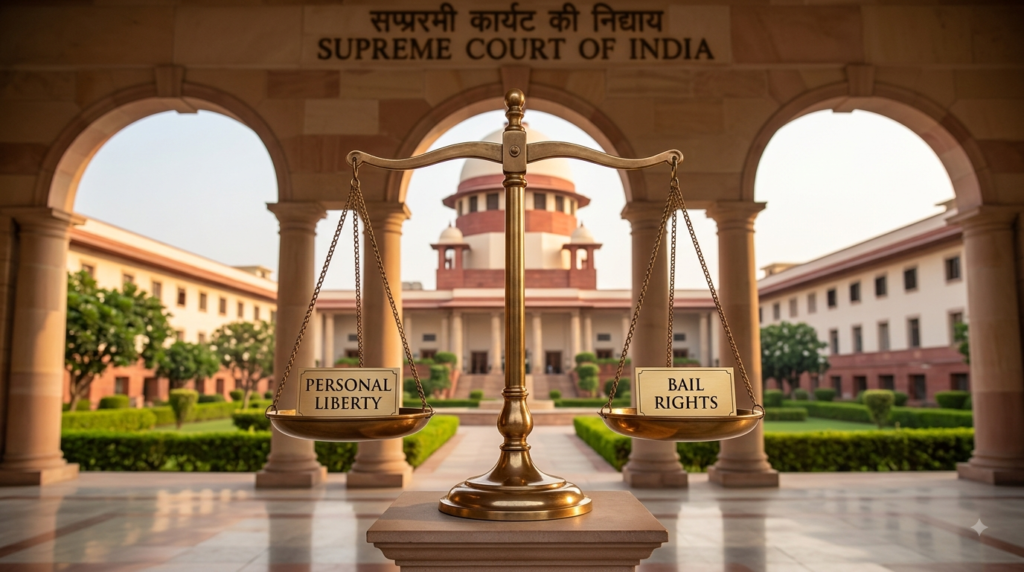
Personal liberty stands as the core foundation of criminal jurisprudence. Consequently, Indian courts constantly balance state authority with individual rights. The landmark judgment Dataram Singh vs State of Uttar Pradesh (2018) strongly reaffirmed that bail is the rule and jail is the exception.
Key Takeaway: A humane judicial approach is vital when deciding bail applications. Depriving freedom must remain a strict exception.
The Dataram Singh vs State of Uttar Pradesh case is a pivotal 2018 Supreme Court ruling. It reiterated that bail is the rule, emphasizing humane treatment and undertrial rights. The court held that pre-trial detention should not act as a punitive measure.
Written by Kapil Balhara | Technically Reviewed for Accuracy | Last Updated: August 2026
Link to Download Dataram Singh vs State of Uttar Pradesh Judgement
Factual Background of the Case
Financial disputes frequently turn into long legal battles. In early 2016, an individual filed an FIR accusing Dataram Singh of cheating over ₹37 lakhs.
The complainant filed a case under Sections 419, 420, 406, and 506 of the Indian Penal Code. In addition, the complainant alleged that a cheque for ₹18 lakhs had bounced.
Throughout seven months of investigation, the police officer did not arrest the accused. Subsequently, the investigating officer submitted a charge sheet. Fearing arrest, the accused sought relief, but the Allahabad High Court denied bail. Therefore, the appellant appealed to the Supreme Court.
Key Legal Issues Addressed by the Supreme Court
The Supreme Court examined the exercise of judicial discretion during bail hearings. Furthermore, it evaluated how lower courts handle non-violent economic offences.
| Legal Issue | Traditional Lower Court Action | Supreme Court Directive |
|---|---|---|
| Bail Post-Chargesheet | Automatic custody upon charge sheet filing. | Unnecessary if no arrest occurred during investigation. |
| Undertrial Detention | Prolonged pre-trial incarceration. | Violation of Article 21 and human dignity. |
| Bail Conditions | Excessively strict conditions. | Reasonable conditions that avoid illusory bail. |
Judicial Approach to Pre-Trial Incarceration
Justice Madan B. Lokur emphasized that the presumption of innocence remains fundamental. Moreover, the court highlighted that historic jurisprudence back to the Magna Carta supports personal liberty.
- Presumption of innocence protects individuals until proven guilty.
- Deprivation of freedom must never serve as early punishment.
- Overcrowding in prisons creates severe social concerns.
- Financial status should not dictate access to justice.
The Bench observed that refusing bail arbitrarily harms society. Therefore, judges must act with empathy while exercising discretion.
Key Takeaway: Bail conditions must never be so strict that they render the grant of bail illusory.
Critical Factors for Granting Bail
The Apex Court outlined practical guidelines for trial judges considering bail applications.

Key Assessment Criteria
- Investigative Conduct: Review if the accused cooperated fully during investigation without fleeing.
- Prior Record: Verify if the accused is a first-time offender or has past convictions.
- Poverty Considerations: Ensure indigent status does not keep an accused trapped in jail.
- Tampering Risk: Check if genuine evidence indicates a threat to witnesses.
Directive for Lower Courts
- Judges must avoid mechanical orders remanding accused persons to custody.
- Courts should prioritize liberty when investigating agencies do not require custody.
- Magistrates must balance complainant concerns against fundamental freedoms.
Seeking assistance with legal defense or bail procedures? Contact [Placitum Advocates] for legal support.
Frequently Asked Questions
Why is Dataram Singh vs State of Uttar Pradesh significant for undertrials? This decision firmly restored the principle that bail is the rule and jail is the exception. It specifically warned courts against sending accused individuals to custody after charge sheets if police did not arrest them during investigation.
What did the Supreme Court state regarding bail conditions? The Supreme Court ruled that conditions attached to bail must remain reasonable. Onerous or impossible conditions defeat the purpose of granting bail, rendering relief meaningless.
Does the judgment apply to economic offences? Yes, the case itself involved allegations of cheating and financial fraud. The court noted that mere financial allegations do not automatically justify pre-trial incarceration if the accused cooperates.