Table of Contents
- The Historic Backdrop of Madhav Rao Scindia v. Union of India
- Key Facts Behind the Constitutional Showdown
- Arguments Presented by the Petitioners and Respondent
- The Supreme Court Verdict: Key Legal Principles
- Comparative Analysis: Constitutional Guarantees vs. Executive Power
- Frequently Asked Questions
Written by Kapil Balhara | Technically Reviewed for Legal Accuracy | Last Updated: October 2026
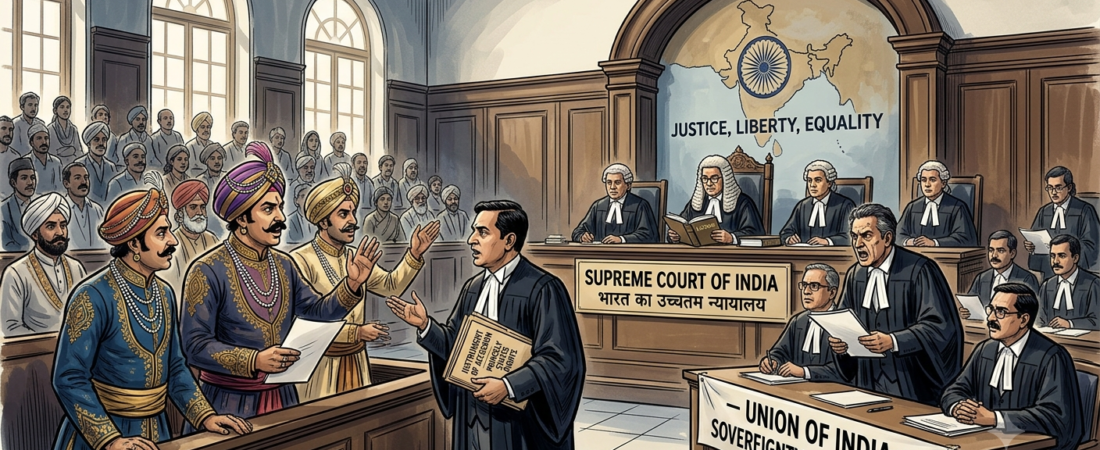
The Madhav Rao Scindia v. Union of India case stands as a monumental landmark in Indian constitutional history, forever altering the balance of executive authority and fundamental rights. The controversial dispute arose when the Government of India attempted to derecognize former rulers through an executive order after failing to pass a constitutional amendment. In our legal analysis, this case fundamentally defined whether executive power could bypass parliamentary processes to strip citizens of guaranteed constitutional entitlements.
1. The Historic Backdrop of Madhav Rao Scindia v. Union of India
When India gained independence in 1947, over 500 princely states existed across the subcontinent. The Dominion of India negotiated Covenants and Instruments of Accession to integrate these territories smoothly. Former rulers abandoned their sovereign authority in exchange for guaranteed Privy Purses, titles, and personal privileges.
Key Takeaway: The integration of former princely states relied on solemn constitutional guarantees rather than simple administrative decrees.
Definition & Case Summary Block
The Madhav Rao Scindia v. Union of India (1970) case was a landmark Supreme Court decision invalidating a presidential order that derecognized former rulers of Indian princely states en masse. The court ruled that Privy Purses were constitutionally protected property rights and executive derecognition violated fundamental constitutional guarantees.
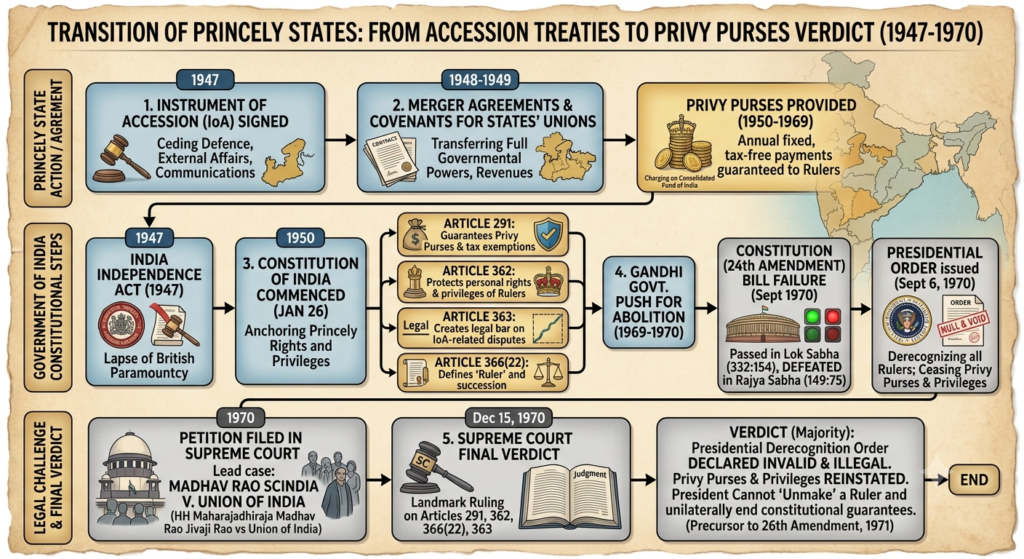
                         [1947 Integration]
            Rulers Sign Instruments of Accession & Covenants
                                  │
                                  ▼
                        [1950 Constitution]
         Articles 291 & 362 Guarantee Privy Purses & Privileges
                                  │
                                  ▼
                   [Sept 1970: Legislative Defeat]
            24th Amendment Bill Fails in the Rajya Sabha
                                  │
                                  ▼
                   [Sept 1970: Executive Order]
          President Derecognizes All Rulers under Art 366(22)
                                  │
                                  ▼
                 [Dec 1970: Supreme Court Judgment]
        Executive Order Struck Down as Ultra Vires & Illegal
2. Key Facts Behind the Constitutional Showdown
To understand this legal battle completely, we must trace the precise sequence of events leading up to September 1970. The political landscape demanded the abolition of princely privileges, leading to a direct conflict with existing constitutional promises.
- Introduction of the Bill: On September 2, 1970, the Government introduced the Constitution (Twenty-Fourth Amendment) Bill in the Lok Sabha to delete Articles 291, 362, and Article 366(22).
- Legislative Failure: While the Lok Sabha passed the bill, it failed to obtain the required two-thirds majority in the Rajya Sabha on September 5, 1970.
- Presidential Action: Just hours after the legislative defeat, the President signed an order under Article 366(22) derecognizing all former rulers.
- Immediate Impact: This order instantly stopped Privy Purses and stripped the rulers of all recognized personal rights and privileges.
- Petitions Filed: Madhav Rao Scindia and other affected former rulers immediately filed writ petitions under Article 32 before the Supreme Court.
3. Arguments Presented by the Petitioners and Respondent
During our review of the arguments, the fundamental tension between state policy and rule of law became strikingly clear. The petitioners claimed that executive power could not nullify constitutional provisions.
Key Takeaway: The case forced the judiciary to evaluate whether political imperatives could override explicit constitutional protections.
- Petitioners’ Stand: The rulers argued that Article 366(22) did not grant the President power to derecognize rulers arbitrarily. Furthermore, they asserted that Privy Purses constituted property under Articles 19(1)(f) and 31.
- Respondent’s Stand: The Union of India contended that recognizing rulers was a sovereign political power rooted in paramountcy. additionally, they argued that Article 363 barred courts from examining disputes arising from covenants.
4. The Supreme Court Verdict: Key Legal Principles
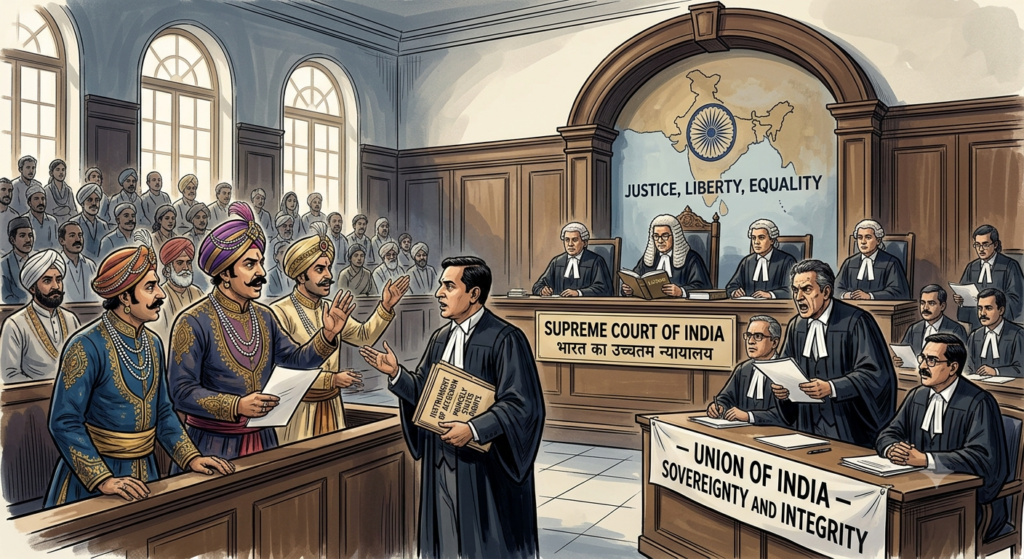
Delivered on December 15, 1970, the 11-judge bench ruled 9:2 in favor of the petitioners, holding the Presidential Order ultra vires and void. Chief Justice J.C. Shah and Chief Justice M. Hidayatullah delivered leading opinions asserting that the executive cannot override express constitutional mechanisms.
Key Takeaway: The judiciary firmly rejected the idea that the Union inherited arbitrary paramountcy over Indian citizens.
Furthermore, the court ruled that Article 291 created an absolute obligation to pay Privy Purses out of the Consolidated Fund of India. Consequently, because Privy Purses represented sum-certain entitlements, they qualified as protected property rights.
Soft Call-To-Action: Exploring constitutional law cases for research? Save our guide or share it with your legal research peers.
5. Comparative Analysis: Constitutional Guarantees vs. Executive Power
To understand the core conflict, examining the statutory provisions analyzed by the Supreme Court provides clear insight.
| Provision | Government’s Interpretation | Supreme Court’s Ruling |
|---|---|---|
| Article 366(22) | Absolute political power to recognize or derecognize rulers. | Limited power coupled with duty to recognize successors. |
| Article 291 | Non-enforceable political directive for paying Privy Purses. | Absolute constitutional mandate creating property rights. |
| Article 363 | Complete bar on judicial review for covenant disputes. | Limited bar; does not prevent reviewing illegal executive orders. |
| Paramountcy | Inherited sovereign right to act outside municipal law. | Paramountcy lapsed in 1947; non-existent under the Constitution. |
Ultimately, this ruling proved that political convenience cannot bypass constitutional processes. Although Parliament later passed the 26th Constitutional Amendment in 1971 to abolish Privy Purses legally, the Scindia case remains a triumph for the rule of law.
6. Frequently Asked Questions
What was the main issue in Madhav Rao Scindia v. Union of India?
The primary issue was whether the President could derecognize former rulers en masse under Article 366(22) to stop Privy Purses after Parliament failed to pass a constitutional amendment.
Why are Privy Purses considered property rights in this case?
The Supreme Court held that Article 291 established a mandatory charge on the Consolidated Fund of India, making Privy Purses a sum-certain legal entitlement protected under property rights.
Did the Supreme Court ruling permanently save Privy Purses?
No, while the Supreme Court struck down the presidential order in 1970, Parliament subsequently passed the Constitution (Twenty-Sixth Amendment) Act in 1971, which formally abolished Privy Purses through proper legislative channels.
Whether you are preparing case briefs or evaluating constitutional precedents, understanding the Scindia judgment is crucial for mastering Indian jurisprudence. Subscribe to our legal insights newsletter today for exhaustive analysis on landmark Constitutional Court decisions!