Written by Kapil Balhara | Technically Reviewed for Accuracy | Last Updated: August 2026
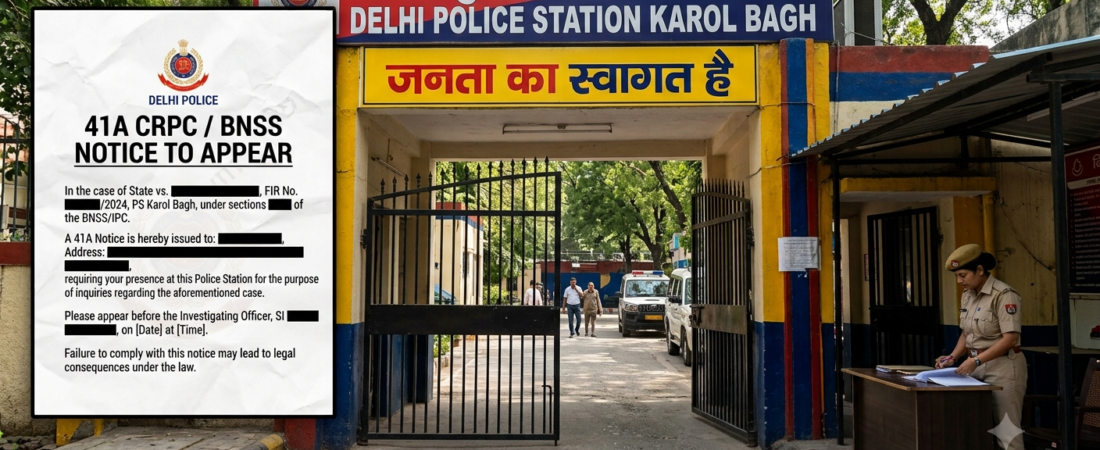
Ignoring an official police summons creates severe anxiety for any family or individual facing an ongoing inquiry. However, failing to answer a 41A Notice from the Delhi Police opens the door to immediate custodial action.
Therefore, understanding your rights, statutory options, and procedure under new criminal laws remains essential to protecting your personal liberty. This guide explains what happens when you miss a police inquiry notice and how to cure non-compliance step by step.
Table of Contents
- What is a 41A Notice Under Indian Criminal Law?
- Statutory Framework: Section 41A CrPC vs Section 35 BNSS
- 5 Legal Consequences of Ignoring a Police Summons
- Landmark Supreme Court Judgements on Notice Compliance
- Step-by-Step Process to Cure Non-Compliance in Delhi
- Draft Templates to Respond to a Police Notice
- Common Pitfalls During Police Inquiries
- Frequently Asked Questions
- Conclusion and Legal Action Plan
What is a 41A Notice Under Indian Criminal Law?
Definition Block: A 41A Notice is a formal statutory order issued by an Investigating Officer directing an accused or suspect to appear for questioning without an immediate arrest. It applies to offences punishable by imprisonment up to 7 years, establishing mandatory cooperation while granting temporary statutory protection against custodial detention.
When an investigation begins, the police must evaluate whether immediate custody is necessary. Under Indian jurisprudence, police officers cannot arrest individuals arbitrarily in minor or moderate criminal matters.
Instead, the officer issues a formal notice of appearance. Consequently, this written document grants you an opportunity to explain your side of the story while remaining free.
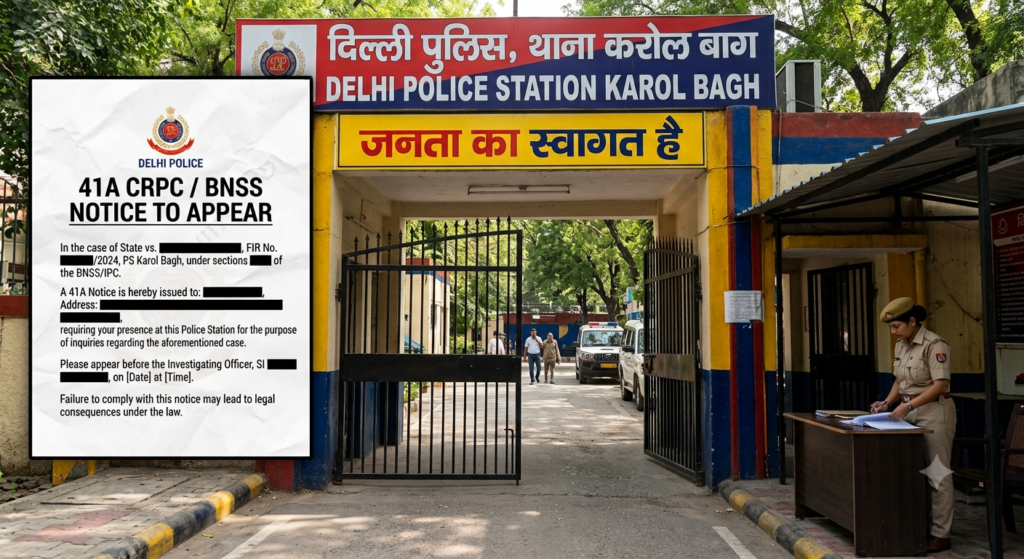
Statutory Shift from Section 41A CrPC to Section 35 BNSS
Historically, Section 41A of the Code of Criminal Procedure, 1973 (CrPC) governed police inquiry summons. However, Parliament updated criminal laws across India under the Bharatiya Nagarik Suraksha Sanhita, 2023 (BNSS).
Specifically, Section 35 of the BNSS now contains these procedural rules. Furthermore, the core protection against arbitrary arrest remains intact under the new framework.
Protection Under Section 35(5) BNSS and Legal Safeguards
As long as you comply with the summons, the police cannot arrest you automatically. In fact, Section 35(5) BNSS explicitly prohibits custodial arrest during compliance.
However, the Investigating Officer (IO) can still arrest you if they record specific written reasons. For instance, if custodial interrogation becomes mandatory, the officer must inform the Magistrate.
Statutory Framework: Section 41A CrPC vs Section 35 BNSS
To understand your legal standing, compare the statutory provisions under the old and new procedural laws.
| Statutory Feature | Section 41A CrPC (Old Code) | Section 35 BNSS (New Code) |
|---|---|---|
| Notice of Appearance | Section 41A(1) CrPC | Section 35(3) BNSS |
| Duty to Comply | Section 41A(2) CrPC | Section 35(4) BNSS |
| Arrest on Non-Compliance | Section 41A(3) CrPC | Section 35(6) BNSS |
| Protection During Compliance | Section 41A(3) Proviso | Section 35(5) BNSS |
| Maximum Offence Penalty | Up to 7 Years Imprisonment | Up to 7 Years Imprisonment |
Key Takeaway: Both procedural codes mandate written notices for offences carrying up to 7 years in prison. Therefore, complying with the notice protects your fundamental liberty.
5 Legal Consequences of Ignoring a Police Summons
1. Triggering Arrest Ground Under Section 41A(3) CrPC & Section 35(6) BNSS
Failing to answer a police notice destroys your statutory immunity against arrest. Specifically, the arrest ground under section 41A(3) CrPC [now Section 35(6) BNSS] gets activated immediately upon willful absence.
Consequently, the Investigating Officer gains the legal authority to arrest you for the underlying offence. Thus, avoiding the police transforms a manageable inquiry into an active arrest scenario.
2. Formal Record of Non-Cooperation in Police Case Diary (Zimni)
When you fail to appear, the IO creates an official record of non cooperation in police diary entries. This administrative register, known as the Zimni, tracks daily investigation developments.
Furthermore, the officer writes that notice service was complete, yet you deliberately evaded questioning. Subsequently, this written record is presented to the Metropolitan Magistrate to justify custodial remand.
3. Judicial Authorization of Arrest Warrants
Citizens often ask: can IO issue arrest warrant without notice compliance? In short, Investigating Officers cannot issue warrants directly because only Courts hold that judicial power.
However, after recording your non-compliance in the case diary, the IO can apply to the Magistrate. For example, the court may issue a Non-Bailable Warrant under Section 72 BNSS based on police reports.
4. Forfeiture of Statutory Immunity Against Custody
Compliance guarantees that police officers must show exceptional reasons before taking you into custody. On the other hand, non-compliance cancels this legal buffer automatically.
In fact, the police no longer need special justifications to arrest an evading suspect. Therefore, responding promptly remains your strongest defense against sudden detention.
5. Adverse Impact on Future Bail Applications
Evading a police summons severely damages your standing in court. Specifically, when you file for regular bail later, prosecutors will highlight your past non-cooperation.
As a result, judges may view you as a flight risk who might tamper with evidence. Consequently, your chances of securing early bail drop significantly.
Landmark Supreme Court Judgements on Notice Compliance
The judicial system provides clear guidelines regarding police summons and arrest powers. Therefore, reviewing Supreme Court of India judgements helps clarify your legal protections.
- Arnesh Kumar v. State of Bihar (2014) 8 SCC 273: The Supreme Court ruled that police cannot make routine arrests for offences carrying under 7 years imprisonment. Officers must issue notices of appearance and record specific justifications before arresting anyone.
- Amandeep Singh Johar v. State of NCT of Delhi (2018): The Delhi High Court introduced standardized notice formats across all Delhi police stations. Additionally, the court mandated written acknowledgments for every notice delivered to citizens.
- Satender Kumar Antil v. CBI (2022) 10 SCC 51: The apex court held that complying with investigation notices entitles an accused to favorable bail consideration. Conversely, non-compliance justifies custodial detention.
Key Takeaway: Judicial precedents protect citizens from arbitrary police action. However, courts strictly expect citizens to cooperate with statutory investigation notices in return.
Step-by-Step Process to Cure Non-Compliance in Delhi
If you missed an inquiry date, take immediate steps regarding how to cure non compliance of police notice before officers initiate coercive action.
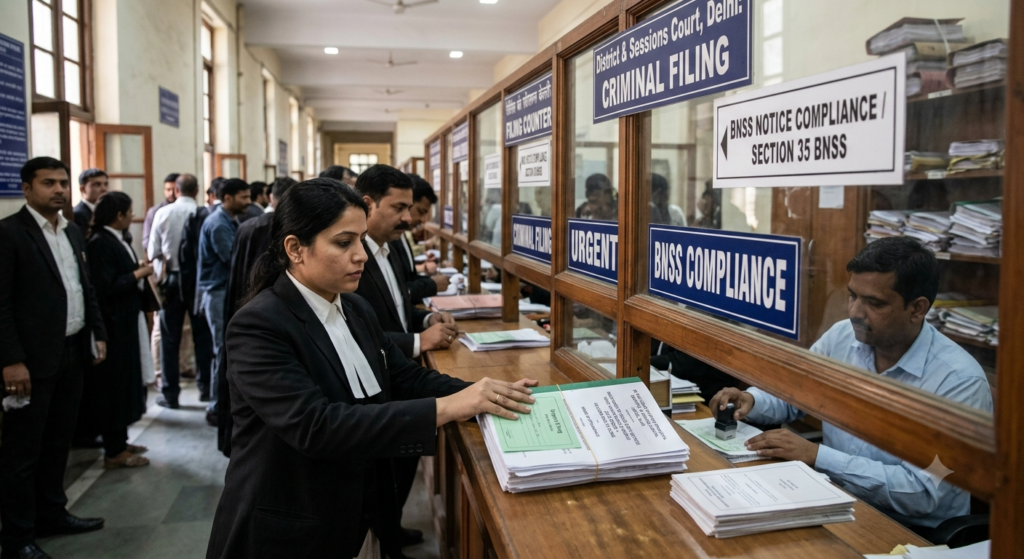
Step 1: Consult an Experienced Defense Advocate
First, contact a qualified criminal lawyer in Delhi. Do not attempt to handle police interactions alone after missing an official summons.
Step 2: Prepare a Formal Written Reply
Next, draft a written response acknowledging the notice. State valid, truthful reasons for your initial absence, such as medical illness, emergency travel, or delayed postal delivery.
Step 3: Dispatch Reply via Registered Post and Email
Then, send your reply to the IO and Station House Officer (SHO) via Speed Post. In addition, email a soft copy to the official district email address of the Delhi Police.
Step 4: Deliver Physical Copy for Official Stamping
Subsequently, have your advocate or representative deliver the reply to the police station. Ensure the Duty Officer stamps and signs your copy as proof of receipt.
Step 5: Evaluate Anticipatory Bail Requirements
Finally, assess your immediate arrest risk. If the IO threatens detention despite your written explanation, evaluate an anticipatory bail requirement after missing police summons under Section 482 BNSS.
Draft Templates to Respond to a Police Notice
Format 1: Written Reply Explaining Delay and Requesting Rescheduled Appearance
To,
The Investigating Officer (IO),
Police Station: [Insert Name, e.g., Saket],
Delhi Police, New Delhi.

Date: [DD/MM/YYYY]

SUBJECT: WRITTEN RESPONSE TO NOTICE DATED [Date] UNDER SECTION 35(3) BNSS / SECTION 41A CrPC IN FIR NO. [FIR Number/Year]

Respected Sir,

1. I am in receipt of your notice dated [Date of Notice], delivered on [Date of Receipt], directing my appearance at Police Station [PS Name] on [Original Date].

2. I am a law-abiding citizen fully committed to assisting the investigation. However, I could not appear on the scheduled date due to [Reason: Medical Illness / Urgent Travel / Late Receipt of Notice].

3. I respectfully deny all allegations mentioned in the complaint. I am ready to join the investigation on any rescheduled date after [Proposed Date].

4. Kindly place this written reply into the official Case Diary and acknowledge receipt.

Sincerely,

____________________
[Your Full Name]
[Address & Phone Number]
Format 2: Written Compliance Intimation with Document Index
To,
The Investigating Officer (IO),
Police Station: [Insert Name],
Delhi Police, New Delhi.

Date: [DD/MM/YYYY]

SUBJECT: DOCUMENT SUBMISSION AND COMPLIANCE PURSUANT TO NOTICE IN FIR NO. [FIR Number]

Respected Sir,

1. In reference to your notice dated [Date], I am appearing today to join the investigation.

2. As requested, I am submitting self-attested photocopies of the following records:
   - Annexure 1: Copy of Identity Proof (Aadhaar / Passport)
   - Annexure 2: [Relevant financial or communication record]

3. I request that these documents be taken on record in the Case Diary and a stamped copy of this letter be issued to me.

Sincerely,

____________________
[Your Full Name]
[Signature]
Common Pitfalls During Police Inquiries
Avoid these frequent mistakes when responding to police communications:
- Sending Verbal Messages via Relatives: Never rely on oral messages sent through family members. Police stations only record formal written applications.
- Ignoring Electronic Summons: Do not ignore WhatsApp messages or emails from police officers. Courts consider electronic delivery as valid statutory service.
- Surrendering Original Documents: Avoid handing over original identity documents or contracts without a formal written Seizure Memo (Fard-Maqboosgi).
- Visiting the Station Without Documentation: Never attend a police station unprepared. Always bring written responses and identity proofs with you.
Frequently Asked Questions
What happens if I ignore a Section 35(3) BNSS notice from Delhi Police?
Ignoring the notice allows the police officer to record your non-cooperation in the Case Diary. Consequently, this revokes your protection against arrest and allows the officer to seek arrest warrants from the court.
Can police arrest me without a warrant if I miss a 41A notice?
Yes, under Section 35(6) BNSS [formerly Section 41A(3) CrPC], failure to comply with a notice grants police officers the power to arrest you for the offence specified in the notice.
How can I prove that I tried to comply with the police notice?
You can prove compliance by keeping a stamped, signed copy of your written reply from the police station, along with Speed Post receipts and official email logs.
Is anticipatory bail necessary if I miss a police summons?
If the police officer refuses your written explanation or applies for a Non-Bailable Warrant, filing an anticipatory bail application under Section 482 BNSS becomes essential to prevent arrest.
Conclusion and Legal Action Plan
Receiving a police summons requires immediate attention, but it does not mean your arrest is inevitable. By understanding statutory provisions under BNSS and acting promptly, you can safeguard your personal freedom.
First, acknowledge the notice in writing and explain any delay clearly. Second, dispatch your response through traceable post and obtain a stamped receipt from the police station. Finally, consult a defense advocate to guide your strategy and secure legal protection if necessary.
Mandatory Legal Disclaimer
This article is authored by Kapil Balhara for educational and informational purposes only. It does not constitute formal legal advice or create an attorney-client relationship. If you face a police summons or inquiry in Delhi, consult a qualified criminal defense advocate immediately to evaluate your specific case details.