Table of Contents
- What Was the ADM Jabalpur v. Shivkant Shukla Case?
- Historical Context: Proclamation of Emergency (1975–1977)
- Key Legal Issues & Arguments
- The Landmark Judgment & Comparative Analysis
- Dissent of Justice H.R. Khanna
- Aftermath & Legislative Remediation
- Frequently Asked Questions
What Was the ADM Jabalpur v. Shivkant Shukla Case?
The ADM Jabalpur case remains the darkest chapter in Indian constitutional history, illustrating the existential danger of unchecked executive power during a state of Emergency.
The case of ADM Jabalpur v. Shivkant Shukla (1976 AIR 1207) was a pivotal constitutional decision by a five-judge Bench of the Supreme Court of India. The Court ruled by a 4:1 majority that during a Presidential Proclamation of Emergency under Article 352, any individual’s right to move a court for habeas corpus or to enforce personal liberty under Article 21 remains suspended.
Historical Context: Proclamation of Emergency (1975–1977)
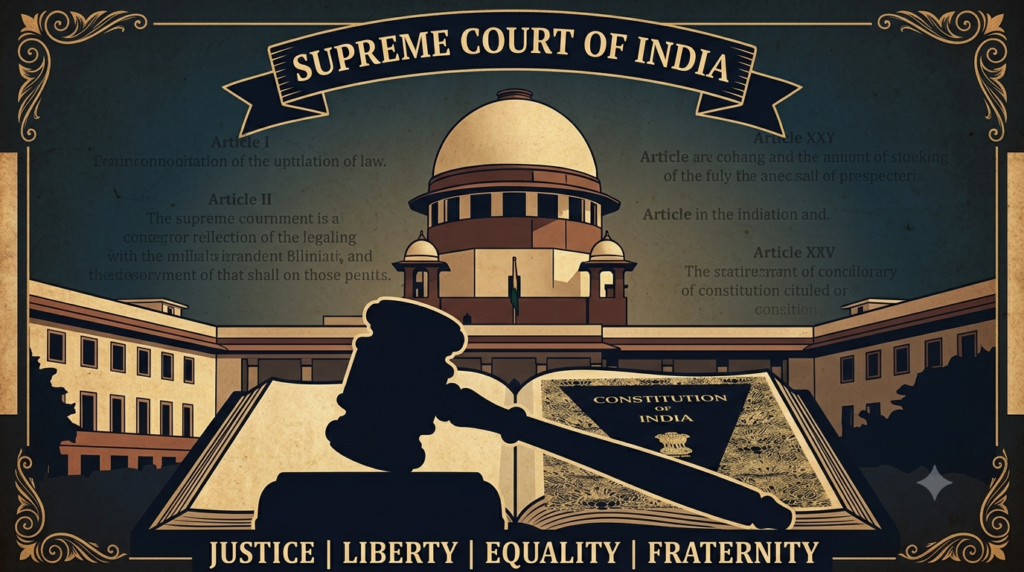
Furthermore, understanding this historic ruling requires examining the political upheaval of June 1975. On December 3, 1971, a national emergency had already been proclaimed due to external aggression. However, on June 25, 1975, President Fakhruddin Ali Ahmed declared a second internal Emergency under Article 352(1) citing internal disturbances.
Subsequently, on June 27, 1975, the President issued a fateful order under Article 359(1). This Presidential Order suspended the right of any citizen or foreigner to move any court to enforce fundamental rights guaranteed under Articles 14, 21, and 22.
Timeline of Events (1971–1976):
1. Dec 3, 1971  : Proclamation of Emergency due to external aggression.
2. June 25, 1975: Proclamation of Emergency due to internal disturbance.
3. June 27, 1975: Presidential Order suspending enforcement of Articles 14, 21, and 22.
4. Jan 8, 1976  : Presidential Order suspending enforcement of Article 19.
5. April 28, 1976: Supreme Court delivers the ADM Jabalpur judgment.
In addition, thousands of political leaders, dissidents, and activists were detained without trial under the Maintenance of Internal Security Act (MISA). Multiple High Courts across India, including Allahabad, Bombay, Delhi, and Madhya Pradesh, held that writ petitions for Habeas Corpus remained maintainable despite the Presidential Order. Consequently, the State filed appeals before the Supreme Court, creating the backdrop for ADM Jabalpur v. Shivkant Shukla.
Key Legal Issues & Arguments
In fact, the central issue before the Supreme Court was whether a writ petition under Article 226 was maintainable during the Emergency to challenge detention orders under MISA.
Core Legal Issues Evaluated:
1. Is Article 21 the sole repository of the right to life and personal liberty?
2. Does a Presidential Order under Article 359(1) create a threshold bar against habeas corpus petitions?
3. Can detaining authorities act outside statutory compliance or with mala fides during Emergency?
Besides these issues, Attorney General Niren De argued on behalf of the Union that the Presidential Order created an absolute bar against judicial review. Conversely, defense counsel including Shanti Bhushan and V.M. Tarkunde argued that executive actions must always carry statutory authority.
Key Takeaway: The state asserted that during an Emergency, the lawfulness of detention orders—even if passed with personal malice or without statutory authority—could not be questioned in a court of law.
The Landmark Judgment & Comparative Analysis
On April 28, 1976, the Supreme Court delivered its verdict. The majority bench comprised Chief Justice A.N. Ray, Justice M. Hameedullah Beg, Justice Y.V. Chandrachud, and Justice P.N. Bhagwati.
Majority Opinions Summary:
- Chief Justice A.N. Ray: Article 21 is the sole repository of personal liberty against State action.
- Justice M.H. Beg: Suspension of enforcement deprives the detenu of locus standi.
- Justice Y.V. Chandrachud: Article 359(1) bars judicial scrutiny into executive satisfaction.
- Justice P.N. Bhagwati: Rule of Law cannot override explicit constitutional provisions under Article 359.
| Legal Parameter | Pre-Emergency Norms | ADM Jabalpur Majority Holding | Post-44th Amendment Norms |
|---|---|---|---|
| Article 21 Status | Fully Enforceable | Enforcement Suspended | Non-suspendable |
| Habeas Corpus Writ | Available under Art. 32/226 | Completely Barred | Fully Restored |
| Judicial Review | Scrutinizes Mala Fides | Ousted entirely | Active & Mandatory |
| Rule of Law | Paramount constraint | Subordinated to Emergency | Inviolable Basic Feature |
Furthermore, the majority upheld Section 16A(9) of MISA, which prohibited disclosing grounds of detention to the detenu or the court.
Dissent of Justice H.R. Khanna
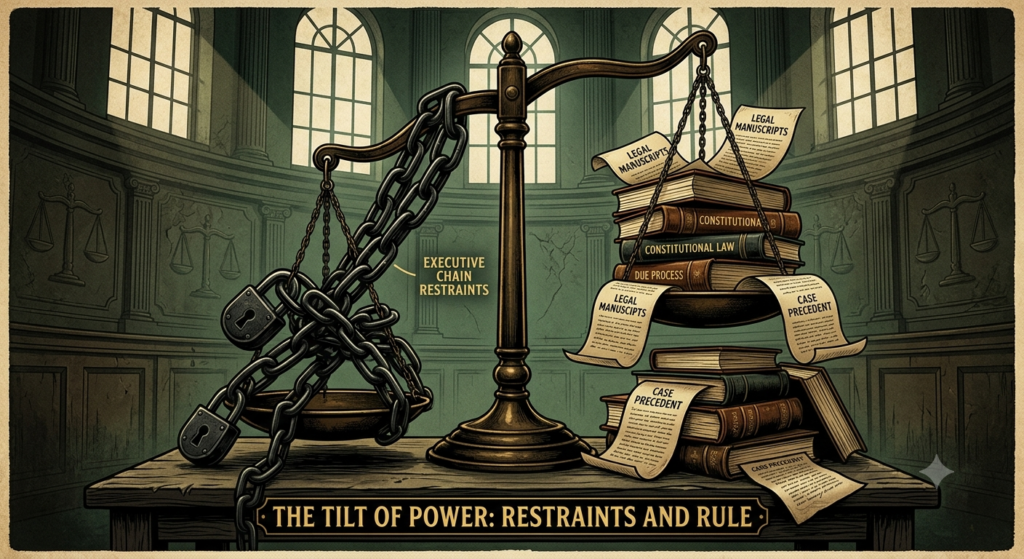
However, Justice Hans Raj Khanna delivered a legendary dissenting opinion. He rejected the contention that Article 21 is the sole repository of the right to life and personal liberty.
Key Points of Justice H.R. Khanna's Dissent:
1. Sanctity of Life Pre-dates Constitution: The right to life and personal liberty existed long before Part III was framed.
2. Rule of Law as Antithesis to Arbitrariness: Executive actions must always possess lawful authority.
3. Article 226 Remains Intact: Article 359(1) suspends fundamental rights enforcement, not statutory remedies or judicial powers.
Key Takeaway: Justice Khanna famously quoted Alan Barth: “A dissent in a court of last resort is an appeal to the brooding spirit of the law, to the intelligence of a future day…”
Indeed, for his courage and adherence to judicial conscience, Justice Khanna was superseded for the post of Chief Justice of India in January 1977.
Aftermath & Legislative Remediation
Subsequently, the backlash against this judgment led to structural reforms in Indian constitutional jurisprudence.
Key Reforms Post-Emergency:
1. The 44th Constitutional Amendment Act, 1978: Amended Article 359 to ensure Articles 20 and 21 can NEVER be suspended during an Emergency.
2. Maneka Gandhi v. Union of India (1978): Expanded Article 21 to mandate procedure that is fair, just, and reasonable.
3. K.S. Puttaswamy v. Union of India (2017): A nine-judge Bench formally overruled ADM Jabalpur, calling the majority ruling fundamentally flawed.
Moreover, Justice Y.V. Chandrachud’s son, former Chief Justice D.Y. Chandrachud, was part of the bench that officially overruled his father’s majority decision in Puttaswamy.
Frequently Asked Question
1. What was the core holding of ADM Jabalpur v. Shivkant Shukla?
The Supreme Court held by a 4:1 majority that during an Emergency under Article 352, no person has locus standi to move a court for habeas corpus or to challenge detention under Article 21.
2. Who was the sole dissenting judge in the ADM Jabalpur case?
Justice Hans Raj Khanna was the sole dissenting judge. He asserted that sanctity of life and personal liberty existed prior to the Constitution and could not be suspended arbitrarily.
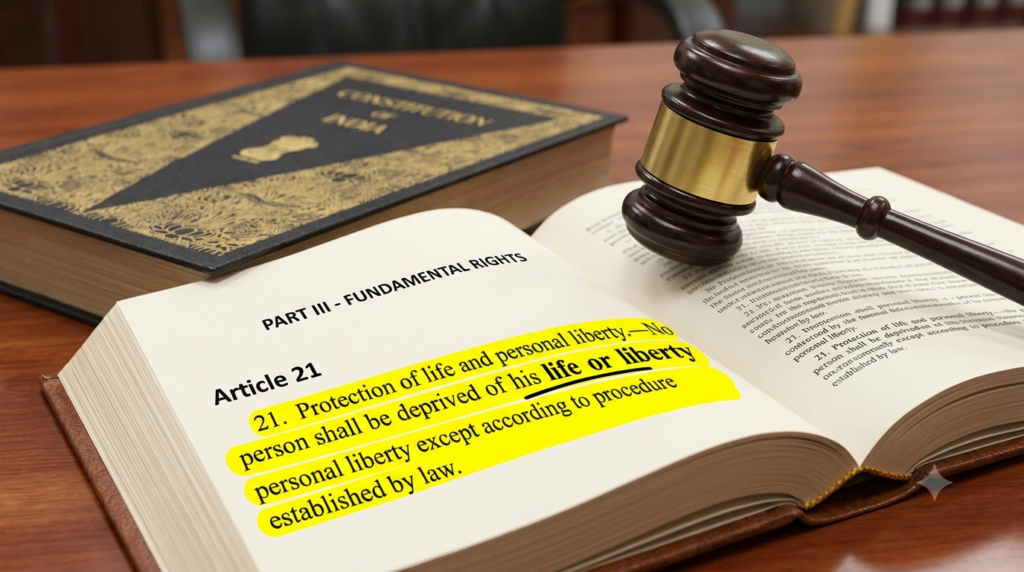
3. Can Article 21 be suspended during an Emergency today?
No. The 44th Constitutional Amendment Act of 1978 modified Article 359 so that enforcement of Articles 20 and 21 cannot be suspended under any Emergency proclamation.
4. Which judgment officially overruled the ADM Jabalpur decision?
The landmark nine-judge Bench decision in Justice K.S. Puttaswamy (Retd.) v. Union of India (2017) formally declared ADM Jabalpur to be erroneous and officially overruled it.