What is the Rojer Mathew v. South Indian Bank Case?
The Supreme Court in Rojer Mathew v. South Indian Bank Ltd. struck down the 2017 Tribunal Rules for violating judicial independence. Additionally, the Bench referred the Money Bill classification of the Finance Act 2017 to a larger Constitution Bench.
Supreme Court of India judgment in Rojer Mathew v South Indian Bank Ltd
The case of Rojer Mathew v. South Indian Bank Ltd. (2019) is a pivotal Supreme Court ruling addressing the constitutional validity of Part XIV of the Finance Act 2017. The Court examined executive control over tribunal appointments, judicial independence, and the passage of non-financial statutes as Money Bills under Article 110.
Written by Kapil Balhara | Technically Reviewed for Accuracy | Last Updated: October 2026
Furthermore, this judgment re-established the delicate balance between legislative authority and judicial oversight. Consequently, it remains a cornerstone reference for legal practitioners, scholars, and judicial aspirants.
Historical Context and Evolution of Tribunalization in India
Tribunalization in India originated to relieve ordinary civil courts and High Courts from immense pendency. For example, the Income Tax Appellate Tribunal (ITAT) was established as early as 1941. Subsequently, the 42nd Constitutional Amendment introduced Articles 323A and 323B to structuralize specialized tribunals.
In addition, several committees emphasized specialized dispute resolution. Specifically, key policy milestones include:
Administrative Reforms Commission (1966): Recommended establishing Civil Services Tribunals for public servants.
Wanchoo Committee (1970): Proposed direct tax dispute forums to replace routine court proceedings.
Raghavan Committee (2002): Suggested setting up the Competition Commission of India.
Key Takeaway: Tribunalization aimed to provide domain-specific expertise and speedy justice. However, executive interference gradually threatened the core independence of these bodies.
Moreover, key judicial precedents shaped tribunal jurisprudence before Rojer Mathew. For instance,L. Chandra Kumar v. Union of India (1997) affirmed that judicial review under Articles 226/227 is a basic feature of the Constitution. Later, Union of India v. R. Gandhi (2010) mandated judicial dominance in search-cum-selection committees.
Key Constitutional Issues Analyzed by the Supreme Court
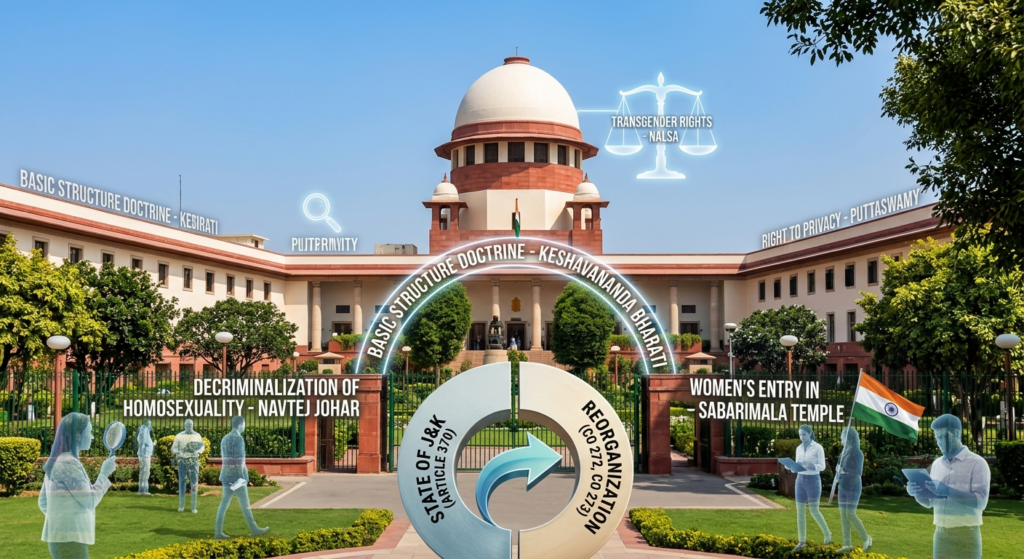
Judicial independence and constitutional separation of powers in Rojer Mathew case
The 5-judge Constitution Bench headed by Chief Justice Ranjan Gogoi analyzed several critical legal challenges:
1. The Money Bill Controversy (Article 110)
Petitioners argued that Part XIV of the Finance Act 2017 did not qualify as a Money Bill. Specifically, altering tribunal service conditions bears no direct relationship to taxation or expenditure charged on the Consolidated Fund of India. Therefore, bypassing the Rajya Sabha was unconstitutional.
2. Excessive Delegation under Section 184
Section 184 empowered the Central Government to prescribe qualifications, tenures, and removal procedures via notifications. Critics contended that Parliament abdicated its essential legislative function to the executive.
Key Takeaway: While the Court upheld Section 184 against excessive delegation claims, it struck down the rules framed under it for violating judicial independence.
Comparative Framework of Tribunal Rules: Before vs. After Finance Act 2017
To understand the impact of the Rojer Mathew ruling, consider the changes introduced by the Finance Act 2017 and the Supreme Court’s directives:
Feature / Metric
Pre-2017 Enactments
Finance Act 2017 (Rules)
Post-Rojer Mathew Directives
Selection Committee
Judicial dominance with CJI or nominee as Chair
Executive-dominated committees with minimal judicial presence
Mandatory judicial dominance to safeguard independence
Tenure of Members
Typically 5 years or up to superannuation age
Short fixed tenure of 3 years
Minimum 5-year tenure restored to maintain merit
Eligibility Standards
Strict judicial background or proven legal expertise
Independent single nodal agency (Ministry of Law) advocated
Impact on Judicial Independence and Separation of Powers
The Supreme Court reiterated that tribunals perform core judicial functions. Thus, executive control over selections, appointments, or tenure directly violates the doctrine of Separation of Powers.
Key Steps Ordered by the Court:
Strike Down 2017 Rules: The Court invalidated the 2017 Rules completely due to constitutional defects.
Interim Appointments: Directed that interim appointments follow parent acts in force prior to the Finance Act 2017.
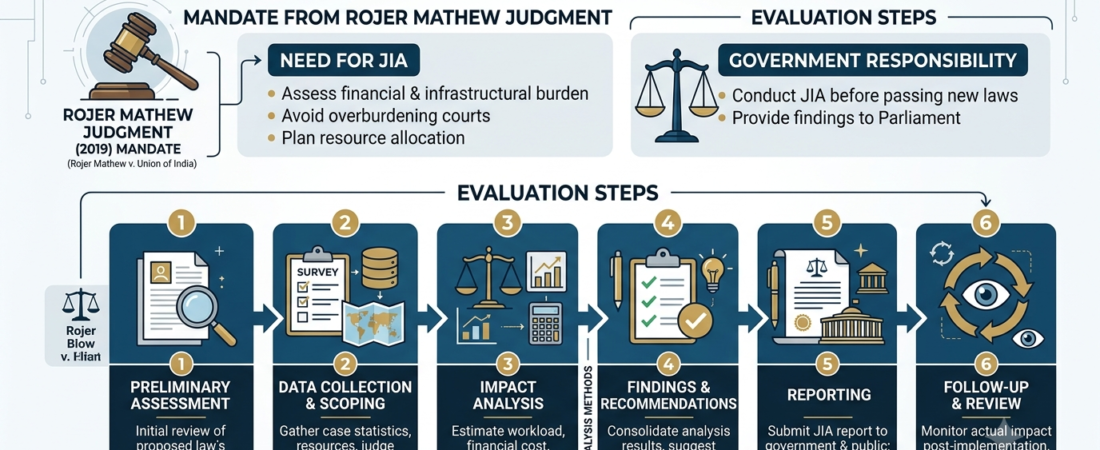
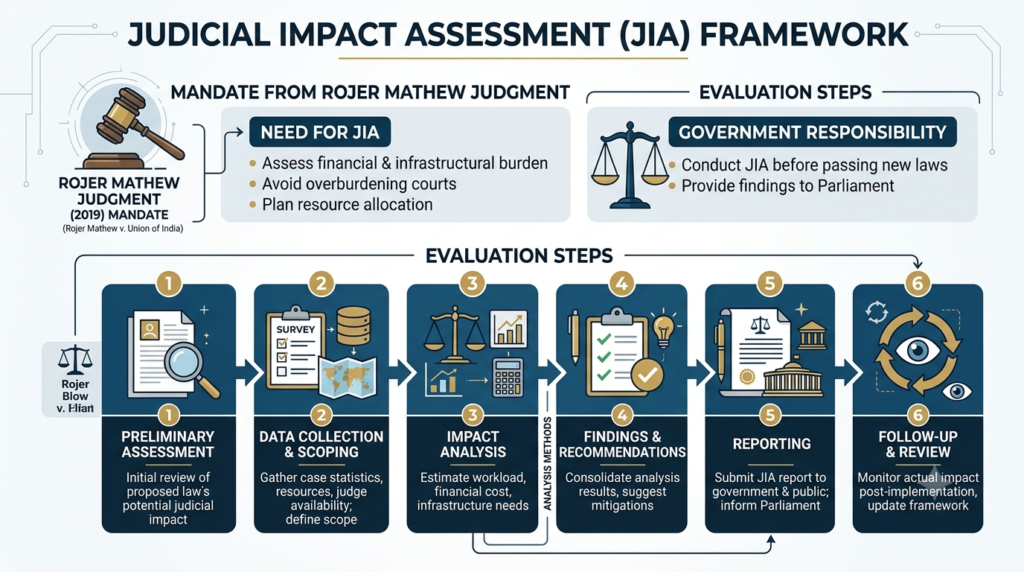
Judicial Impact Assessment: Mandated a comprehensive Judicial Impact Assessment to measure caseloads and resource needs.
Referral on Money Bills: Referred the interpretation of Article 110 and K.S. Puttaswamy precedents to a larger Constitution Bench.
Infographic of Judicial Impact Assessment mandate from Rojer Mathew judgment
Key Takeaway:Rojer Mathew v. South Indian Bank Ltd. ensured that efficiency cannot replace judicial integrity. Consequently, executive overreach in quasi-judicial bodies remains strictly checkmated.
Frequently Asked Questions
What was the main holding in Rojer Mathew v. South Indian Bank Ltd.?
The Supreme Court struck down the Tribunal, Appellate Tribunal and other Authorities Rules 2017 for violating judicial independence. It also ordered fresh rules to be framed and referred the Money Bill question to a 7-judge Bench.
Why was the passage of Part XIV of the Finance Act 2017 controversial?
Part XIV altered the qualifications, tenure, and service conditions of members across 25 statutory tribunals. Critics argued that passing these changes as a Money Bill bypassed the Rajya Sabha unconstitutionally.
What is a Judicial Impact Assessment in the context of tribunals?
A Judicial Impact Assessment analyzes the financial, infrastructural, and litigation burden generated by new statutes. The Supreme Court directed the Union Government to perform this assessment for all tribunals.
If you found this legal analysis insightful, feel free to share it with fellow legal associates, researchers, and students.